
Carroll Painting · Colorado Springs · Joints & Preparation
Caulk Separating from Siding in Colorado Springs
Identify the joint before deciding how to repair it.
A visible gap beside a caulk bead can be easy to notice and harder to interpret. Carroll Painting can discuss the joints, surface preparation and repainting scope for your Colorado Springs exterior, with attention to the siding material and the areas that actually require sealing.
Request a Free EstimateFamily-owned in the Springs since 1988.
Not every siding joint should be caulked
Start by identifying the installed siding and the specific detail. A joint at trim, a board end and a clearance near flashing can require different treatment. The appropriate approach should follow the siding and sealant manufacturers' instructions.
For example, James Hardie's joint flashing bulletin recommends flashing rather than caulk at the specified lap-siding butt joints. This is an example of why a generic instruction to caulk every opening is inappropriate; it is not a prescription for every siding system or proof that your house has that product.
Useful observations for the estimate
Separation at the edge
Show where the bead has pulled away from the siding or trim. Include a wider photo so the exact joint can be identified.
Cracking through the bead
Describe cracks within the sealant separately from a cracked paint film above it. Avoid assuming that the two observations have the same cause.
Surface condition nearby
Include loose paint, staining or visible deterioration next to the joint. Any substrate or water-related repairs should have a defined responsibility.
Previous work
Tell us when the area was last painted or sealed, whether the concern recurs and whether product or installation information is available.
Define the sealing work before the finish paint
Ask which joints are included, which should remain unsealed and why. The proposal should describe the handling of failed material, surface preparation and a compatible sealant where sealing is appropriate. Confirm how the product's application and drying requirements fit the painting sequence.
Carroll's exterior checklist includes caulking in the preparation conversation. Your estimate should still be specific to the actual surfaces. Ask whether localized work is sufficient or whether a broader review of the same detail is included. Painting over a separated bead is not the same scope as addressing the joint beneath it.
Read more about caulking and sealing and surface preparation.
A real siding preparation reference
This preparation image from Carroll's Herbal Wash exterior project shows authentic work from the company library. It is a reference for discussing what happens before a new finish, alongside a clear written description of your project's joint work.
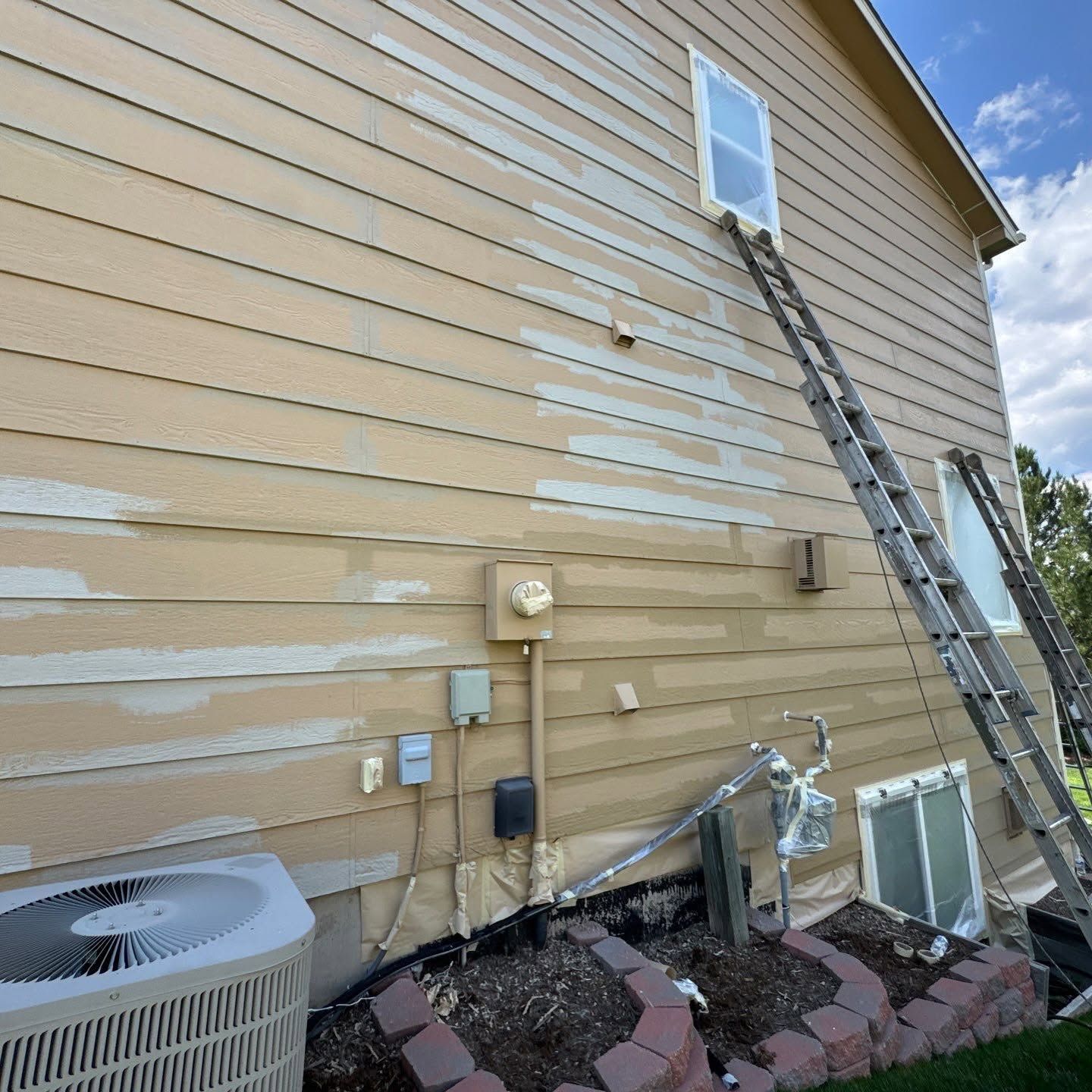
Authentic Carroll project; the photograph is not a documented close-up of caulk separation.
Questions about separated siding caulk
Should every visible gap be filled?
No. Identify the material and joint detail, then follow the applicable manufacturer's instructions. Some details require flashing or a clearance rather than caulk.
Can I choose a sealant just because it says paintable?
Paintability is only part of the selection. Check compatibility with the surface, the joint requirements and the planned finish.
Does recaulking mean the siding needs replacement?
Not automatically. The substrate condition and the cause of the separation need to be considered. Define any repair or replacement work separately.
Will localized repairs match the older finish?
Discuss the paint boundary and appearance. Older color and sheen can make a small painted repair noticeable even after the joint work is complete.
Make joint preparation part of the plan.
Talk with Carroll Painting about your Colorado Springs siding and exterior finish.
Request Your Free Estimate