
Texture character
Show the surrounding pattern and the previous repair. Discuss the texture you want retained and whether the proposed work is localized or covers a broader area.
Carroll Painting · Colorado Springs · Interior Finishes
The color matches. The patch still stands out.
A repaired wall or ceiling can look different even when the paint color seems right. Carroll Painting can discuss texture matching, preparation and repainting boundaries for your Colorado Springs interior.
Request a Free EstimateFamily-owned in the Springs since 1988.
Carroll’s interior painting checklist asks homeowners to discuss sheen and texture along with color. These are different parts of the finish conversation. A patch may be smoother, rougher or shaped differently from the surrounding wall; a new coating may also reflect light differently.
Describe what you see rather than assume another coat will solve every difference. Is the repair’s edge visible? Does the area stand out only when light crosses the wall? Does the paint look glossier there? Those observations help define the work to discuss on an estimate. Our drywall and texture repair page connects that preparation with the finishing scope.
Show the surrounding pattern and the previous repair. Discuss the texture you want retained and whether the proposed work is localized or covers a broader area.
Ask how the edges and surrounding surface will be prepared. Carroll’s checklist specifically prompts a conversation about feathering and blending repairs into the adjacent wall.
The estimate should explain the preparation and primer approach before identifying the finish paint. Treat those steps as part of the plan rather than an unspecified extra.
Identify windows, fixtures and the angles where the mismatch catches your eye. Discuss the expected result under the lighting you actually use in the room.
Compare a touch-up around the repair with repainting the complete wall or ceiling. A larger paint boundary can be worth discussing when old coatings, previous patches or sheen differences make isolated work noticeable. Repainting and correcting texture are separate decisions; a new color does not automatically change the underlying surface pattern.
Have the proposal name the surfaces included and the limits of the repair. Discuss realistic expectations for blending existing texture instead of relying on a promise that every patch will be invisible. Review our estimate guide to compare proposals that describe the same boundaries.
This completed living room comes from Carroll Painting’s project materials. It offers an authentic interior finish reference for discussing your room’s overall appearance.
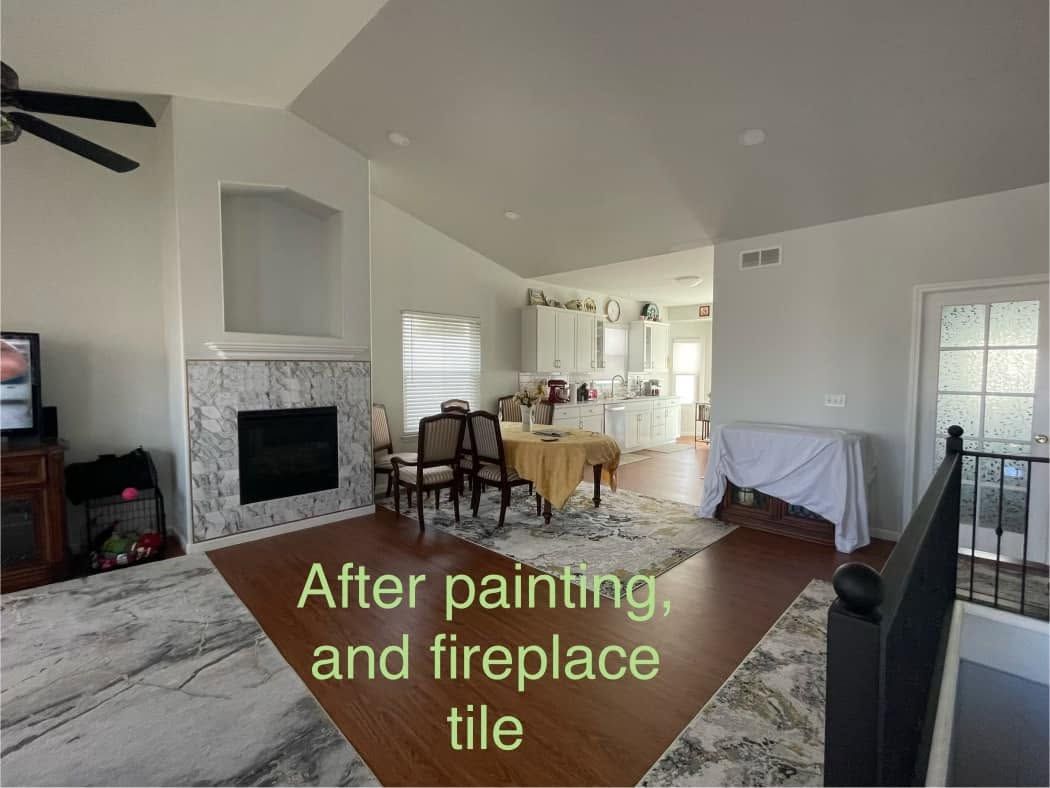
Illustrative project photo, not a documented texture-matching repair. Fireplace tile work is not attributed to Carroll Painting.
Matching color is only one part of the finish. Discuss the surface pattern, repair transition and sheen separately before selecting the repainting approach.
Discuss the specific surface and realistic blending limits during the estimate. Existing materials, past repairs and viewing conditions deserve attention; do not assume an invisible result.
No. The proposal should distinguish correcting or blending the surface from the primer and paint work applied afterward.
Identify those concerns separately. Share their history and resolve any underlying issue before cosmetic finishing. See our cracked drywall and water stains guides.
Talk with Carroll Painting about your texture matching concerns and a clear preparation and repainting scope in Colorado Springs.
Request Your Free EstimateCARROLL PAINTING • COLORADO SPRINGS
Over a century of family craftsmanship.
Caring for Colorado Springs homes since 1988.
Tell us about your project. We’ll follow up to discuss the work and next steps.
Explore surface care guides below.
Choose a topic to explore common concerns and plan your next step.

Rooted locally.
Refined through generations.
(719) 491-8257
peter@carrollpainting.net
carrollpainting@me.com
Monday–Friday: 8 AM–8 PM
Saturday: 8 AM–5 PM
Mountain Time
© 2026 Carroll Painting. All rights reserved. · Privacy Policy