
CARROLL PAINTING · COLORADO SPRINGS · PAINT FAILURE GUIDE
Paint Blistering in Colorado Springs
Raised spots deserve a closer look before another coat.
When paint lifts into blisters, the visible bubble is only part of the story. Carroll Painting helps Colorado Springs homeowners plan surface preparation and repainting after the condition underneath has been assessed.
Request a Free EstimateFamily-owned. Serving Colorado Springs since 1988.
THE SHORT ANSWER
What does blistering paint mean?
Blistering describes raised areas where a paint film has lifted from the layer below. Heat or moisture can be involved, but the appearance alone does not prove why it happened. The location, coating history and condition of the substrate all need consideration before repair.
For a Colorado Springs exterior, note whether the blisters occur on a sun-exposed elevation or around a window, roofline or joint. Indoors, mention any history of condensation or water staining. These are clues to discuss, rather than a diagnosis.
Sherwin-Williams' blistering guide explains common heat- and moisture-related causes.
A useful record before the walkthrough
Timing
Did the paint blister after a recent repaint, a period of heat or a water problem? Share dates if you have them and any product information from the previous job.
Pattern
A few isolated spots and widespread lifting call for different scopes. Photograph the entire wall as well as the affected finish.
Recurrence
Tell us if a patched area has blistered again. Repeating failure is a reason to investigate the conditions underneath before simply covering the spot.
Resolve the conditions, then rebuild the finish
If active moisture or another underlying defect is suspected, addressing it comes before repainting. We can discuss the painting scope and identify when a separate specialist needs to evaluate a related issue.
Once the surface is suitable, the proposed work may include removing unsound coating, smoothing the repair boundary, cleaning, appropriate priming and repainting. Access, drying time and the extent of paint failure affect the plan.
- Define which surfaces and elevations are included.
- Describe preparation rather than relying on a promise of a thicker coat.
- Allow for the chosen product's application and curing requirements.
- Discuss how a repaired section will blend with the surrounding finish.
Explore our preparation process, exterior painting and interior painting.
Real local work, with preparation in the picture
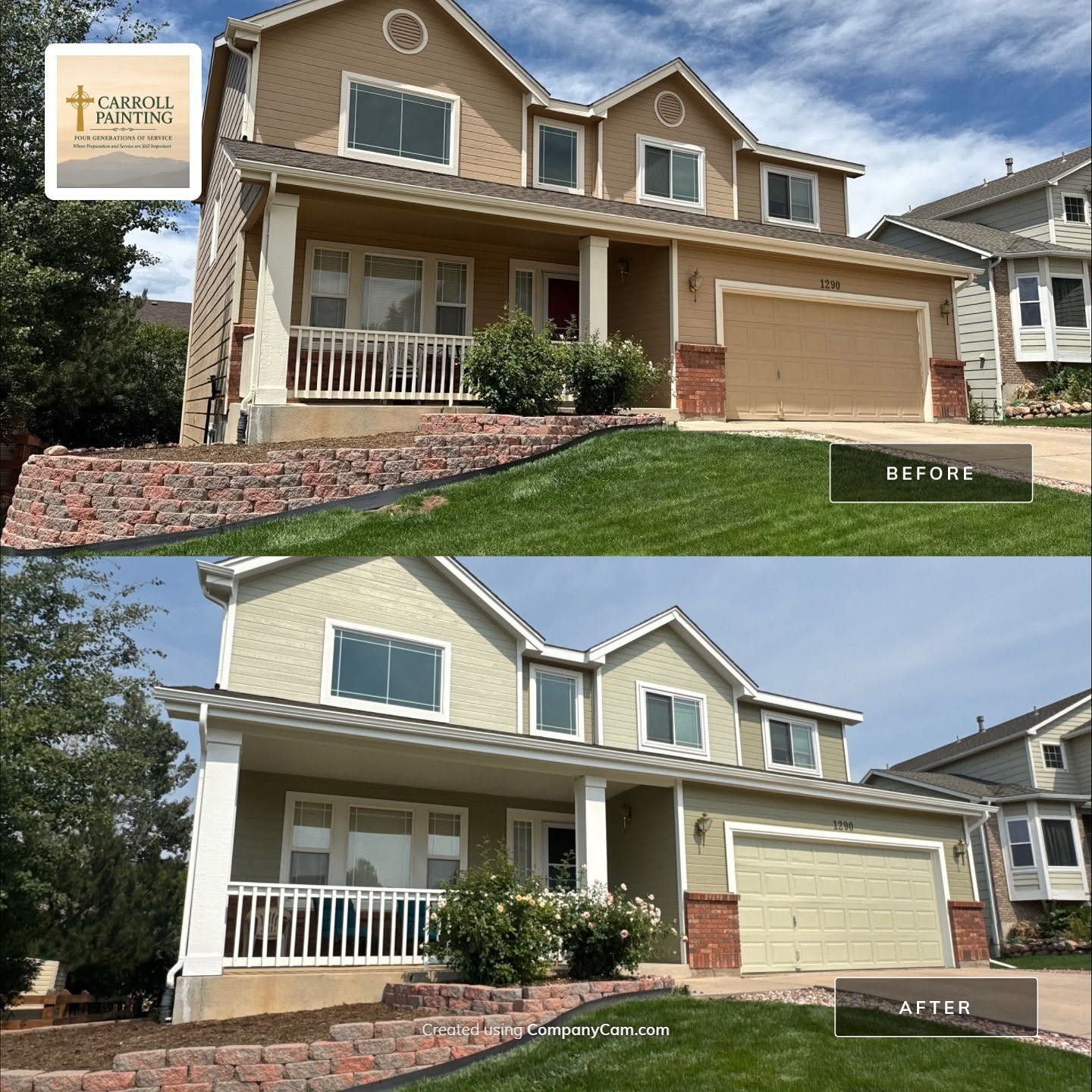
Our documented Herbal Wash exterior project in north Colorado Springs includes siding preparation and a completed repaint. It is an example of Carroll Painting's exterior work, not a claim that every blistering surface has the same cause or repair.
Paint blistering questions
Is blistering always caused by a leak?
No. Moisture is one possibility, but heat and application conditions can also be involved. Inspection and the history of the surface help distinguish the next steps.
Should I pop the blisters before an estimate?
You do not need to disturb the finish to request an estimate. Clear photos and a description of when the spots appeared are a useful starting point.
Will a touch-up solve it?
It depends on the extent of failure and whether the underlying condition has been resolved. A limited area may be repairable; broader repainting may give a more consistent finish. We discuss that difference in the estimate.
How is this different from bubbling in fresh paint?
The words are often used interchangeably. Small bubbles that appear during application can differ from a cured coating lifting into blisters. Tell us when the change appeared; our paint bubbling guide covers that initial distinction.
Plan the repaint around the cause.
Show us the affected area and discuss a clear scope for your Colorado Springs home.
Request Your Free Estimate