
Carroll Painting · Family-owned since 1988
Painting Interior Wood Railings: Define the Prep Before Choosing the Dark Finish
A wood railing can become the focus of an interior update without turning the proposal into an entire staircase remodel. This real estimate separated the railings, posts, preparation and coating choices.
Based on an actual Carroll Painting estimate. Client identities, exact addresses and prices are omitted.
This Colorado Springs proposal named scuff sanding of the wood railings and posts, a choice between Extreme Bond and Gallery primer, light sanding after priming, and an Emerald Trim Urethane or Gallery finish. Caviar was the proposed color unless changed. The record documents a plan, not a verified completed repaint; the photographs show the existing wood railings.
A Carroll Painting project note · Reviewed October 10, 2026
The actual starting point
The wood rails and posts were the painting scope.
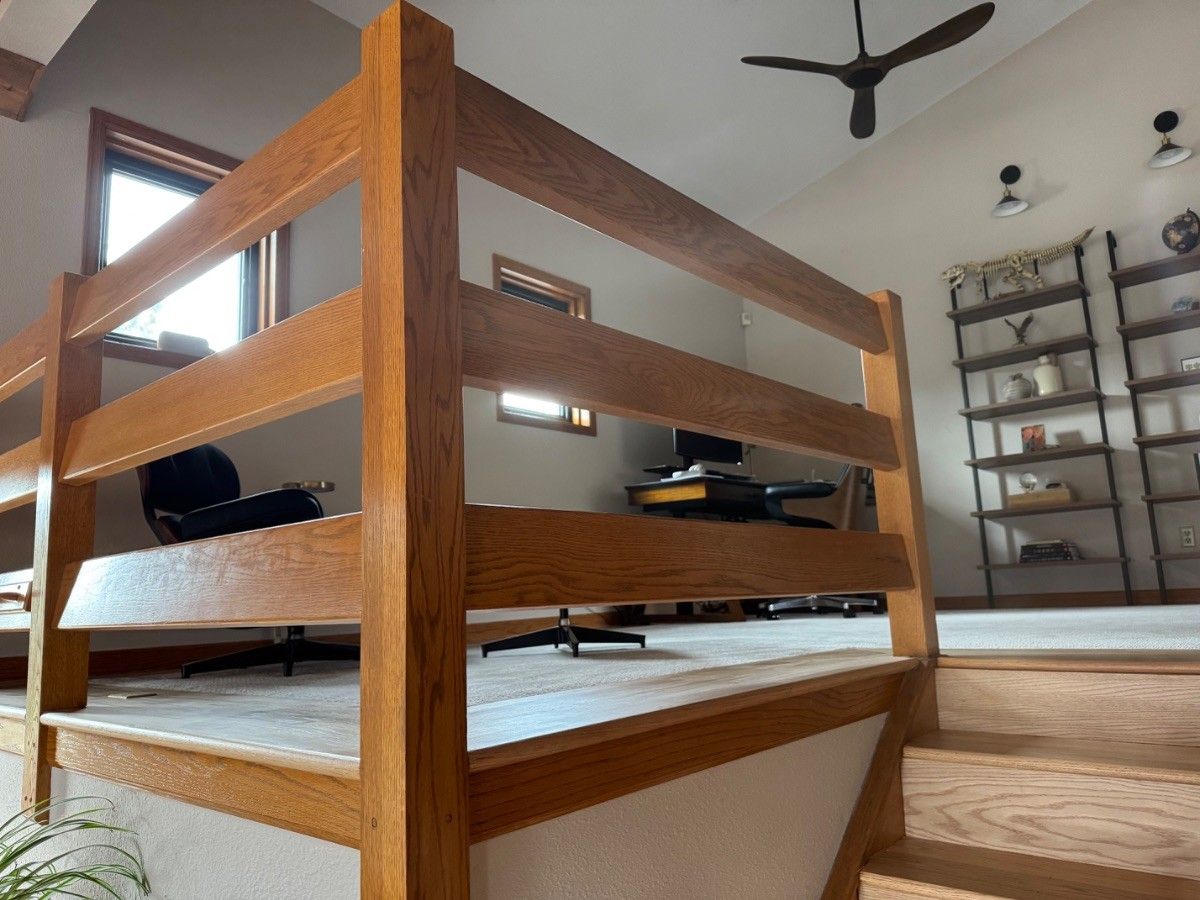
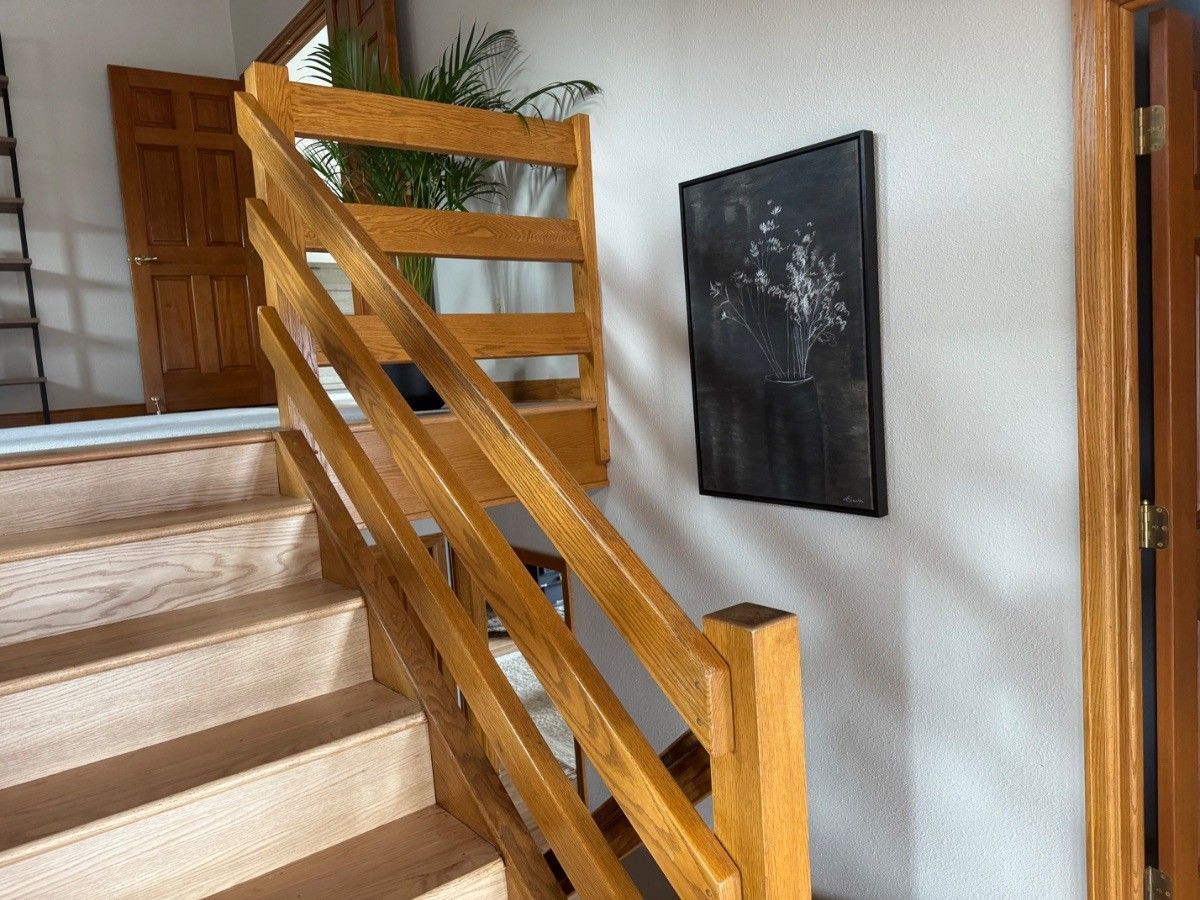
The photographs attached to this Colorado Springs 80904 estimate show horizontal wood guardrails, posts and stair railings beside carpeted steps and existing interior finishes. The written item was titled Entry Way and Stairwell Railings, with an Interior Wood Railings description. It did not describe rebuilding the staircase or changing its structure.
That distinction helps answer a common question: can I update the look of the railing without repainting every surface around the stairs? In this record, the proposed painting work centered on the wood railings and posts. The photographs show surrounding walls, flooring and other details for context, but their presence in a photograph does not put them in the painting scope.
This is a project planning note based on the estimate and its attached photos. We do not have a verified completed finish, final color selection or after gallery for this proposal. The useful lesson is how the Carroll family put preparation and finish decisions into writing before the homeowner would need to approve the work.
Before the primer
Scuff sanding was specifically named.
The preparation entry called for scuff sanding the railings and posts that were to be painted. That is more specific than a broad promise to freshen up the staircase. It identifies the existing wood components and the preparation proposed before the coating choice. It does not establish complete stripping to bare wood or replacement of the existing railings.
During your own estimate, point out the top surfaces, sides, undersides, posts and intersections you expect to be included. Ask Carroll to identify the existing finish and confirm the preparation for those surfaces. The record does not identify the wood species or provide a coating test result, so neither should be inferred from the photographs alone.
Also separate finish preparation from repairs. A loose component, a damaged joint or a structural concern needs its own discussion and written treatment. This estimate does not document structural repair or certify the railing. A painting scope should make clear what will be prepared and coated, while any separate repair question is resolved before scheduling.
Two primer alternatives
The estimate offered a choice, not two guaranteed primer coats.
The proposal named either Sherwin Williams Extreme Bond bonding primer or Sherwin Williams Gallery Primer. The word either matters. It does not say that both primers would be applied, and it does not document which one was eventually selected. Reading alternatives as a sequence would change the scope described in the record.
For a similar interior wood railing project, ask which primer Carroll proposes after reviewing the existing surface, and have that final selection recorded. Then ask how it fits with the chosen finish product. The coating names are evidence of the alternatives offered in this specific estimate, not a universal product recommendation for every wood railing.
If you are comparing proposals, write down the preparation, primer and finish as three separate items. A coating brand alone does not tell you what is included before it is applied. Ask for enough detail to understand the selected system and how the contractor plans to address the condition of your own existing wood.
Real project context
After priming
The plan addressed primer texture without promising a flawless substrate.
The next step proposed light sanding of the primed surface to reduce texture introduced by priming as best as possible. This is a useful detail because it tells the homeowner that the primer stage would be reviewed before the finish. It also contains a qualification rather than a promise of an entirely texture-free result.
Nothing in this railing item establishes full wood-grain filling, removal of every existing mark or conversion of the underlying wood into a perfectly smooth surface. If grain, dents or profiles concern you, identify them during the estimate and ask which are addressed by the proposed preparation. Discuss the appearance you want before assuming it follows from choosing a dark paint.
Ask whether a sample or a small reviewed area would help you understand the proposed finish for your project. That is a question for your own plan; the record does not document a sample completed here. Keeping the distinction between existing wood texture, primer texture and finish appearance makes the conversation more precise.
The dark finish decision
Caviar was proposed, while the finish product still had alternatives.
The homeowner color entry named Sherwin Williams Caviar unless determined otherwise. The finish specification offered either Emerald Trim Urethane or Gallery. Those details document a proposed dark color and two finish alternatives. They do not prove the final color, sheen, application method or combination actually used.
For your own Colorado Springs interior update, discuss the railings in relation to the surrounding walls, floors and connected rooms. The attached photos show why a railing can be visually important from more than one viewpoint. Look at the upper guardrail, the stairs and the entry view when deciding which components should share a finish.
Have the selected product, color and sheen confirmed before work begins. If spraying, brushing, removable components or an off-site process are important to you, ask about them explicitly. The written railing item does not establish those methods, and a cabinet-style product name should not be treated as proof of a particular application process.
Planning around the stairs
Access and protection need their own conversation.
The photos show carpet next to wood components, adjoining rooms and several angles of the staircase. These are practical details to discuss when planning protection and access. Ask which surrounding finishes will be masked or covered and how the crew will reach the included surfaces. The image provides context, not a documented day-by-day protection layout.
Explain which routes through the home you need to use and ask what access arrangements are possible during preparation and coating. This record does not supply a work duration, a verified return-to-use time or curing instructions for a final product. Do not assume that a surface can be handled normally simply because it looks dry in a photograph.
Also confirm what stays outside the project. Painting stair treads, refinishing floors, repainting walls and ceilings, and replacing railing components are not automatically part of this railing item. If you want any of those services, request a separate description so that a focused finish update does not become a collection of unspoken expectations.
Real project context
From proposal to a clear choice
Keep the final decisions visible before scheduling.
The recorded message from Peter offered scheduling information, a preparation checklist and an optional complimentary color consultation as next steps. It did not record a technical back-and-forth resolving the primer or finish alternatives, and it does not establish a completed project. We therefore keep those alternatives visible in this story.
Before booking a similar railing repaint, ask for a final surface list and a selected coating schedule. Confirm the existing-condition concerns, the preparation, the primer, the finish and the color. Then discuss access and any areas that will remain unchanged. These answers are more useful than assuming that an attractive color name settles the entire job.
A free in-person estimate gives the Carroll family a chance to inspect the actual wood and review your priorities. Bring the parts you want updated and the details you want preserved. A focused plan can then explain exactly what the proposed railing painting includes, with separate answers for repairs, neighboring surfaces and the appearance you expect.
Bring this to your walkthrough
A clear plan starts with four checks.
Identify every component
Point out rails, posts, sides, undersides and intersections. Confirm which existing wood surfaces will be painted.
Resolve the coating alternatives
Ask for the selected primer and finish product, rather than treating either/or wording as two included systems.
Discuss the texture you expect
Separate wood grain and damage from texture introduced by priming. Confirm what preparation addresses each concern.
Plan access and protection
Discuss the carpet, adjoining rooms and staircase routes, plus product-specific return-to-use guidance.
Questions homeowners ask
Before your own project.
Can I paint the wood railing without repainting the entire staircase?
This real proposal focused on interior wood railings and posts. Stair treads, floors, walls and ceilings were not automatically included by that description. Ask for your own component list and any neighboring painting work to be stated separately.
Did this project use Caviar on the finished railings?
Caviar was the proposed homeowner color unless changed. A completed repaint and final color are not verified in this record, so the photographs are presented as existing-condition context.
Were Extreme Bond and Gallery primer both included?
The specification offered either Extreme Bond bonding primer or Gallery Primer. It did not document both being applied. Confirm the selected primer and its relationship to the final finish system for your own railings.
Does scuff sanding mean stripping all the wood to bare wood?
Not in this written description. The estimate named scuff sanding of the railings and posts, followed by priming and light sanding of the primed surface. Complete stripping was not established.
Will the painted railing have no visible wood grain?
That result is not promised here. The proposal addressed scuff sanding and reducing primer-induced texture as best as possible. Full grain filling and elimination of every existing mark were not documented.
Were the railings going to be sprayed?
The railing item does not establish an application method. Ask Carroll about the proposed method, where the work will happen and how adjacent surfaces will be protected before assuming a sprayed or off-site process.
How long before we can use or touch the painted railing?
This record does not provide verified return-to-use or cure times. Ask for guidance based on the actual product, application conditions and access plan agreed for your project.
Make the plan fit your home.
Bring your questions, the surfaces you want to change and the details you want to preserve. The Carroll family can review them with you during a free in-person estimate.
Book Your Free EstimateExplore interior painting or more interior and cabinet project stories.