
Carroll Painting · Family-owned since 1988
Respect the timing. Keep the mural repaint scope clear.
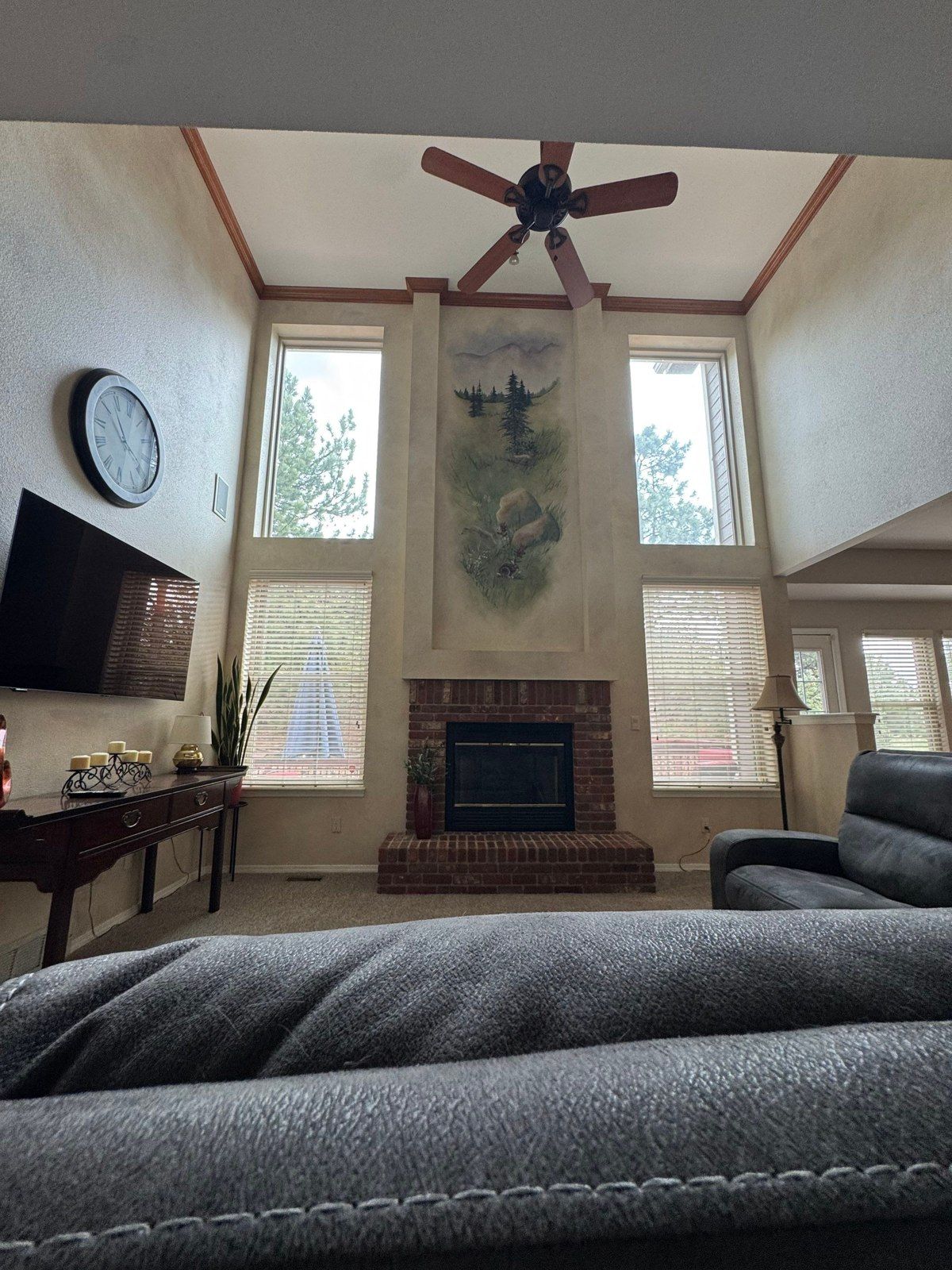
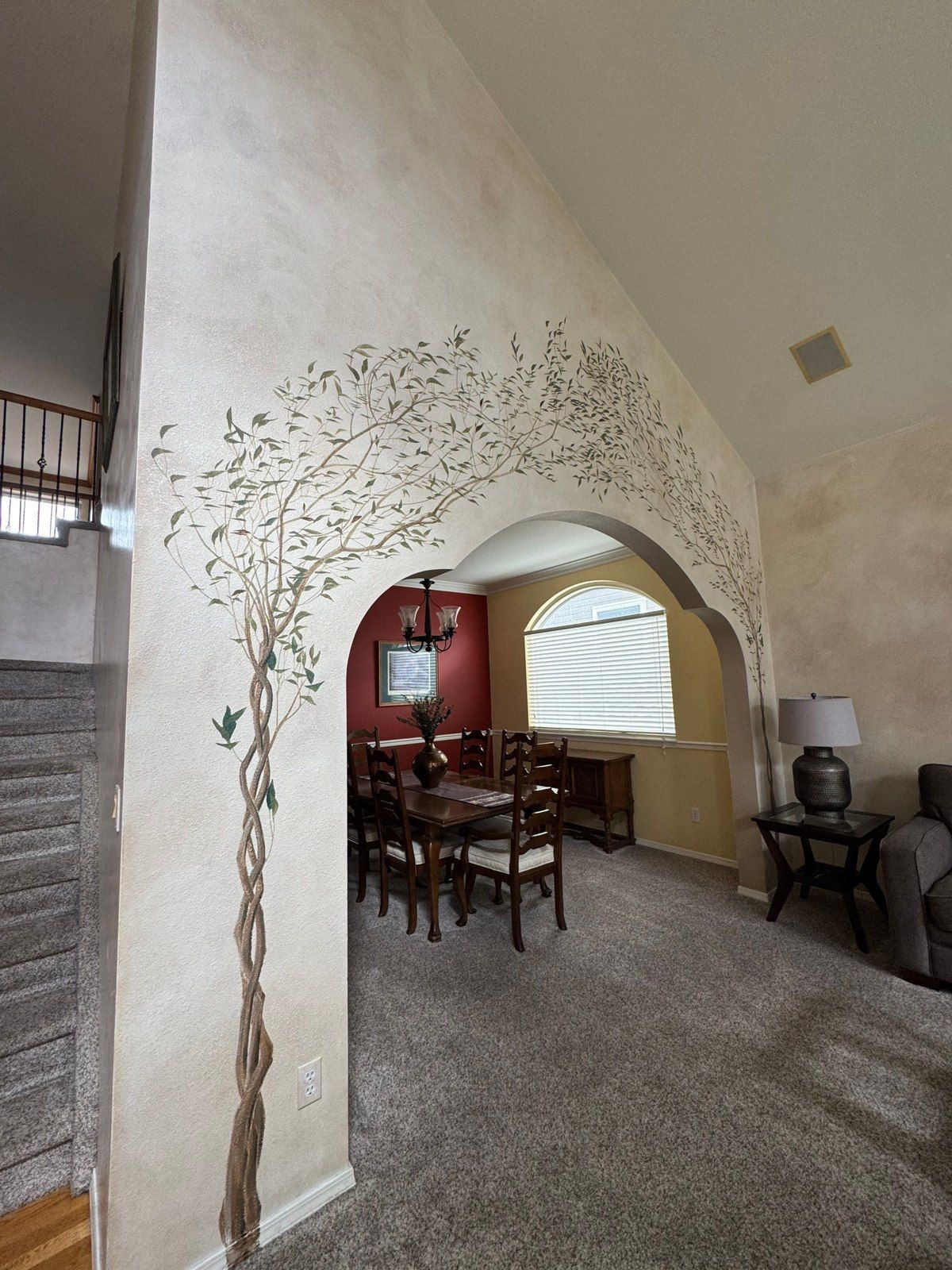
Two photos attached to this Colorado Springs estimate in ZIP 80919 show mural-covered surfaces at a tall fireplace wall and an arched opening. The proposal describes masking, corner-to-corner priming of mural-covered areas and a new color chosen by the homeowner. The customer later said their realtor wanted to wait, and Peter acknowledged that decision.
Based on an actual Carroll Painting proposal, its recorded conversation with Peter and two photographs attached to that same estimate. The reviewed record is marked declined after the customer said their realtor wanted to wait. These are existing project-context photos, not finished-work images. Client identities, exact addresses and private prices are omitted.
You can clarify a mural-repainting scope before deciding when to start. In this actual Carroll case, the written plan calls for protecting areas that will remain, applying primer across the mural-covered areas from corner to corner, and painting the homeowner’s chosen color. The customer’s later message says the realtor wanted to wait. The record does not explain why or confirm a later repaint, so the next step is to coordinate the timing and verify the exact surface boundaries before proceeding.
A Carroll Painting project note · Reviewed October 11, 2026
A real decision to wait
What did the customer and Peter say about timing?
The homeowner’s message says their realtor wanted to wait and thanks Peter for his time. Peter replied courteously, wished them a good weekend and invited them to reach out if the family could help. The reviewed estimate is marked declined. Those are the recorded facts; the conversation does not explain the realtor’s reasoning or give a new start date.
The useful lesson is that defining a project and deciding to start it are separate steps. A homeowner can understand the surfaces, preparation and finish choice while timing remains unsettled. In this case, Peter’s response respected the customer’s decision rather than turning a proposed mural repaint into a claimed completed job.
If a realtor or another adviser is involved in your own plan, reconnect that advice with the actual work being proposed. Ask what needs to happen before you decide, which surfaces remain under consideration and when it makes sense to revisit the scope. This story does not claim that a particular listing strategy, buyer response or sale outcome caused the delay.
| Room or item | Surfaces recorded |
|---|---|
| Named work | Paint over murals; a defined wall-finish change rather than a whole-home repaint |
| Protection | Mask off areas not selected for painting |
| Primer boundary | Mural-covered areas, described as corner to corner; confirm the exact edges at the walkthrough |
| Primer purpose in the proposal | Prepare for covering the existing mural colors; no completed coverage result is established |
| New color | Homeowner’s choice; no final color is recorded in the reviewed exchange |
| Tall wall and arched opening | Visible in the same-estimate photos; review access, returns and stopping points in person |
| Product and coat count | The named mural item does not establish a final primer product or finish-coat count |
| Timing | Customer reported realtor advice to wait; no later start or completion is documented |
Use the photographs to locate the actual work
Why do a tall fireplace wall and an arch need clear surface boundaries?
One same-estimate photo shows a mural on the tall wall above a fireplace, between windows. The other shows artwork extending around an arched opening into an adjoining room. These are specific architectural contexts, not interchangeable examples of a flat rectangular wall. The photos give the homeowner and estimator a shared way to point out where the planned finish change belongs.
Review the upper wall, the areas beside openings and the transition into the arch with the family in person. Ask where the selected wall begins and ends, whether the inside returns of the opening are included and which neighboring surfaces retain their finish. The source photos locate those questions, but they do not independently answer every surface-inclusion question.
Keep the painting boundary connected to the written mural item. A fireplace visible in a photograph does not add fireplace refinishing. A view into another room does not add all of that room’s walls. The proposal should make the chosen extent understandable without asking a crew or homeowner to infer it from the artwork’s shape alone.
A preparation boundary is part of the specification
What does the proposal mean by corner-to-corner priming?
The mural item describes applying primer over the mural-covered areas from corner to corner, followed by the homeowner’s chosen color. That language makes the extent of the preparation worth confirming. It describes more than identifying individual painted marks; it asks the homeowner and estimator to agree on the selected surface area that will receive the preparation.
During your own walkthrough, identify the corners, openings and other stopping points the phrase refers to. A mural that spans an arch or rises above a fireplace can create questions about connected planes and returns. Ask the family to define those boundaries in the selected scope, especially if part of the artwork or an adjacent wall is intended to remain.
The recorded primer instruction describes the plan’s intent to cover the old colors. It is not proof of a completed coverage result, a guarantee for every existing mural material or a product recommendation for another home. The actual surface and coating should be reviewed before the final preparation specification is confirmed.
Real project context
Masking names what stays
Which surfaces should remain protected during a mural repaint?
The first task in the written item is to mask off areas that will not be painted. That instruction belongs beside the selected-wall list. In the photos, the mural areas meet windows, openings, fireplace features, furnishings and other room finishes. These visible details make protection a concrete conversation rather than a generic extra at the bottom of a proposal.
Point out the components you want to preserve, including window and door trim, adjacent finishes and any furnishings near the work. Ask which items you should remove or move and which will be protected in place. The source does not include an itemized moving plan or establish that every trim component near the mural was selected for painting.
If the project’s extent changes after a timing discussion, review the protection boundary again. Adding another wall or excluding part of an opening can change where the painting stops. Keep the selected surfaces and retained finishes visible together so a revised plan remains clear to everyone involved.
The new finish should be a specific choice
What still needs to be confirmed about color, product and coverage?
The mural item says the new color is the homeowner’s choice. It does not record a final color, a primer product or a finish-coat count in the named task. Those details should not be borrowed from another estimate or filled in from a standard assumption about interior painting. The reviewed conversation is about waiting, not a completed final finish selection.
For your own project, ask which primer and finish specification will be used for the existing surface, what coverage plan is proposed and how the chosen color will be reviewed in the room. Consider the tall wall and the adjoining areas in the discussion so the final choice relates to the actual setting. This case does not establish that the homeowner chose a neutral color or changed every wall to the same shade.
Put the selected color and surface assignments into the proposal when the timing is ready. If a finish remains undecided, mark it as a question. Clear unresolved items are more useful than invented certainty, particularly when an adviser’s input or a future project decision may affect which surfaces are ultimately selected.
A calendar decision does not expand the scope
How should the painting plan connect with realtor input?
The customer reported that their realtor wanted to wait. The source does not say that the home was listed, that a sale was pending or that painting would change its value. Keep those unknowns separate from the documented mural-repainting task. The existing proposal can still serve as a reference when the homeowner is ready to review the project again.
Useful questions for the planning conversation are specific: what decision are you waiting for, who needs to review the selected surfaces and what would make it appropriate to revisit timing? Ask the family to check availability when you are ready rather than assume a previous estimate reserved a later date. This record does not establish a rescheduled appointment or a promised future start.
If the eventual plan changes, confirm the current room conditions, the mural boundaries and the chosen finish before proceeding. A timing update should not silently add adjoining rooms, ceilings, cabinets or trim. Reconnect the calendar conversation with the written surface list so the work under consideration remains the same clearly defined project.
Real project context
Keep the story anchored to what is recorded
What can a homeowner take from this case?
The proposal provides three concrete tasks: protect surfaces that will remain, prime the selected mural-covered areas from corner to corner and apply a homeowner-chosen color. The photos show the tall wall and arched opening that give those tasks their context. The conversation records a decision to wait and a respectful response from Peter.
It would go beyond the source to claim that the family completed the repaint, that the homeowner removed the murals independently or that waiting produced a sale benefit. None of those outcomes is established in the record reviewed. The case is useful because it shows how a proposed finish change can remain clear even when the project does not move forward at that time.
For a mural repaint in your own Colorado Springs home, bring photographs, the surfaces you want to change and the details you want preserved. Explain any timing condition or adviser input that affects the decision. The Carroll family can review the room with you and connect the preparation and finish choices to a defined written scope.
Bring this to your walkthrough
A clear plan starts with four checks.
Selected walls
Mark the exact mural-covered planes, corners and opening returns.
Retained finishes
Identify windows, fireplace features, trim, furnishings and adjoining surfaces to preserve.
A complete finish plan
Confirm the primer specification, chosen color and coverage plan for the actual surface.
A timing decision
State what remains undecided and revisit availability and scope when ready.
Questions homeowners ask
Before your own project.
Should I repaint wall murals now or wait for realtor input?
This case cannot establish one answer for every home. The customer said their realtor wanted to wait, and Peter respected that decision. Clarify the work you are considering, what decision remains open and who needs to review the timing. The record does not explain why the realtor wanted to wait or document a later project.
What did the Carroll mural-repainting estimate include?
The named item describes masking areas not selected for paint, applying primer to the mural-covered areas from corner to corner and painting the homeowner’s chosen color. Confirm the exact surface edges, preparation specification and final finish for your own home rather than assume that every mural project has identical boundaries.
Does corner-to-corner mean the whole house or every adjoining room?
No such scope is established in this record. The instruction refers to the mural-covered areas in the named painting item. Identify the selected wall planes and stopping points with the estimator. Connected openings and views into another room do not automatically add that room to the work.
Does painting around an arch include the inside returns?
The photo shows artwork around an arched opening, but the reviewed text does not independently define every return surface. Ask the family to mark the included faces and where the new finish stops. Keep the agreed boundary in the selected proposal.
Are the fireplace, window trim and ceiling included?
The photograph does not add those components to the named mural item. The source specifically calls for masking areas not selected for painting. Confirm each component you want changed or preserved, and request explicit inclusion if you want work beyond the mural-covered wall surfaces.
Was a primer brand, final color or coat count confirmed?
The named item records priming and a homeowner-chosen color but does not establish those final details in the reviewed exchange. Confirm the appropriate product and coverage plan for the actual surface before work proceeds. This page does not invent a finish specification from another proposal.
Do these photos show a finished repaint or a successful home sale?
No. They are existing project-context photos attached to the same estimate. The customer said their realtor wanted to wait, and the reviewed record is marked declined. The material reviewed does not establish a completed repaint, listing activity or sale outcome.
Make the plan fit your home.
Bring your questions, the surfaces you want to change and the details you want to preserve. The Carroll family can review them with you during a free in-person estimate.
Book Your Free EstimateExplore interior painting or more interior and cabinet project stories.