
Carroll Painting · Family-owned since 1988
Comparing Cabinet Painting Options: Components, Finishes and Kitchen Use
A cabinet estimate can contain more than one kitchen item without describing identical work. This Colorado Springs proposal in ZIP 80917 offers a useful example: product options, door and drawer counts, preparation and everyday kitchen use all need to be read together.
Based on an actual Carroll Painting estimate. Client identities, exact addresses and prices are omitted.
Compare the actual cabinet components as well as the finish descriptions. This proposal lists 11 doors, four drawers and 11 frames or boxes in its main kitchen item; its optional kitchen item lists 15 doors and 11 frames or boxes. The record does not resolve that difference, so the next step is clarification before selection.
A Carroll Painting project note · Reviewed October 9, 2026
Start with the component list
What does this Colorado Springs cabinet estimate actually include?
The cabinet overview identifies doors, drawers and frames as the surfaces being considered. The main kitchen item then provides a count: 11 cabinet doors, four cabinet drawers and 11 frames or boxes. That detail gives a homeowner something concrete to review during the walkthrough instead of relying only on the phrase kitchen cabinet painting.
For your own kitchen, compare the written list with the components you want changed. Point out the island, exposed ends, pantry fronts and any separate built-in that matters to your plan. Those examples are questions to bring to an estimate, not extra surfaces proven to be included in this proposal. Ask which faces and components the count represents before assuming that a familiar room label describes every part of the cabinetry.
Make the comparison consistent
Why should the optional cabinet quantities be clarified?
The optional kitchen item names 15 doors and 11 frames or boxes, while the main item separates 11 doors from four drawers. The numerical difference is visible in the record. It is not evidence that four new doors were installed, that drawers were omitted from an agreed job or that one finish necessarily covered more cabinetry.
Ask the estimator to explain whether the two descriptions use different counting conventions or describe a different scope. Then review both choices using a consistent component list. This is particularly helpful when trying to compare painting estimates: a different product name is only one part of the comparison. A clear answer about the same physical surfaces makes the options easier to understand without guessing why the quantities differ.
Preparation is a separate question
What preparation and application were described?
The overview calls for cleaning the cabinet surfaces and scuff sanding. It also lists a primer step and a finish-coat plan, with the products primarily sprayed, if not sprayed entirely. These are recorded elements of this proposal. They explain why preparation and application should be read beside the component count rather than treated as an invisible extra.
During a cabinet estimate, show the existing finish and identify the appearance you want changed. Ask which surfaces will be prepared, how the adjacent room will be protected and how the application arrangement fits your kitchen. The available record does not establish a wood species, a grain-filling scope or the handling of every hinge and accessory. Bring those questions to the family so the chosen scope can address the actual cabinets.
Related Carroll project
Finish options need confirmation
Were the cabinet products the same in every item?
No. The overview names Sherwin Williams Emerald Trim Urethane and Extreme Bond primer. The main kitchen item names Emerald Trim Urethane or Benjamin Moore Command, while the optional kitchen item names Sherwin Williams Scuff Tuff or Benjamin Moore Scuff X. The alternatives are part of the proposal text; they do not establish which product was ultimately selected or used.
The useful homeowner question is which complete preparation and finish plan applies to the option being considered. Ask the family to connect the selected product, primer, color and sheen to the agreed component list. This project note does not rank the products or claim that one suits every household. It shows why a product reference in an overview should be reconciled with the specific item before work is approved.
Plan for everyday use
What should be discussed about returning the kitchen to use?
Both kitchen descriptions include instructions about allowing time before refilling cabinets and before hard use. They are planning notes in this particular proposal, alongside alternatives whose final selection is not established here. They make everyday use a sensible part of the estimate discussion, rather than a question left until the kitchen is already being worked on.
Ask when the cabinets can be handled, refilled and used normally under the final product and project instructions. Explain how your household uses the kitchen and which access you need to coordinate. The record does not provide a complete production schedule or prove when the cabinetry was returned to service. A written plan should connect the chosen finish with the specific care instructions the family gives for your job.
Choose the intended scope
Does an option in a proposal automatically become included work?
The optional section states that its items are additions outside the displayed main total. This matters because two kitchen entries can look like two equally complete choices while still needing a conversation about how the intended option will be represented in the final scope. The reviewed record does not document an agreed final selection or a completed Carroll cabinet result.
Ask whether an optional item is intended as an addition, a replacement choice or a proposal revision for your project. Do not infer the answer solely from its position on the page. Before proceeding, review the quantities, preparation, finish and total together with the family. This question is useful for cabinet refinishing proposals with alternatives even when the homeowner already knows the color they want.
A useful estimate conversation
What should you bring to a cabinet painting walkthrough?
Bring a short list of the components you want painted and photographs showing how those components connect to the room. Note the finishes you want retained and the questions you have about access, preparation and everyday use. In this local proposal, the quantity and product differences are the details that deserve an explicit explanation.
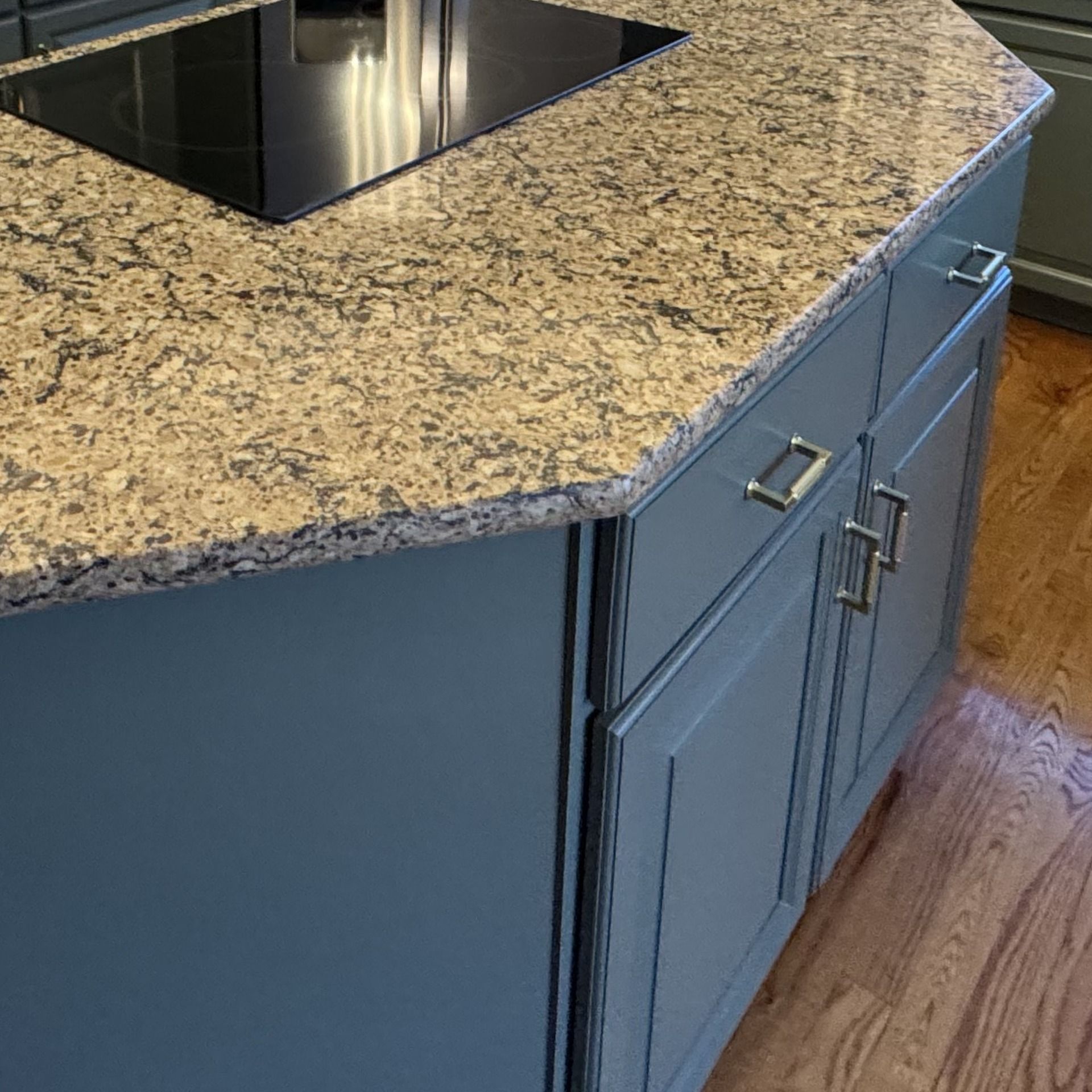
The image on this page is a real cabinet example from Carroll Painting’s project library, from a different kitchen. It illustrates cabinet surfaces without pretending to resolve this proposal’s selections or show its outcome. For your own Colorado Springs cabinet estimate, the aim is a consistent written plan: the same components, a confirmed finish option and clear responsibilities before the work begins.
Bring this to your walkthrough
A clear plan starts with four checks.
Component counts
Review doors, drawers, frames and every additional surface requested.
Finish option
Connect preparation and product references to the chosen item.
Selection
Confirm whether an option adds, replaces or revises the main scope.
Kitchen use
Ask for access and care instructions for the final finish plan.
Questions homeowners ask
Before your own project.
What is included in a kitchen cabinet painting estimate?
The surfaces depend on the written scope. This example names doors, drawers and frames, then supplies component counts. Review the actual components and faces you want painted with the estimator.
Why do the cabinet quantities differ between these options?
The reviewed proposal does not explain the difference. Its main item lists 11 doors and four drawers, while the optional item lists 15 doors. Clarify how the components are counted before comparing the options.
Was a final cabinet paint product selected?
The available record lists alternatives and does not establish a final selection. Confirm the product and preparation plan for the option you choose.
Does this estimate include filling cabinet wood grain?
The reviewed scope does not establish a grain-filling item. Ask about that separately if it is part of the appearance you want.
Can an optional kitchen item be treated as an automatic replacement?
The record does not support that assumption. Ask how the intended choice will be reflected in a revised or selected scope.
When can I refill and use painted cabinets?
Ask the family for the instructions connected to your final product and project. The example contains return-to-use notes, but is not a universal schedule for every kitchen.
Is the photograph from this estimate?
No. It is a real example from another Carroll Painting kitchen, clearly labeled as related project material. It does not show the outcome of this proposal.
Make the plan fit your home.
Bring your questions, the surfaces you want to change and the details you want to preserve. The Carroll family can review them with you during a free in-person estimate.
Book Your Free EstimateExplore cabinet painting or more interior and cabinet project stories.