
Carroll Painting · Family-owned since 1988
Drywall Repair and Whole-Wall Painting: Reading the Repair Boundary
A small damaged area does not necessarily mean a small paint area. This Colorado Springs proposal in ZIP 80923 describes repairing a water-damaged wall, priming new patches and applying paint to the whole wall for consistent color. It also keeps optional bathroom painting separate.
Based on an actual Carroll Painting estimate. Client identities, exact addresses and prices are omitted.
The proposal connects localized drywall repair with a wider finish boundary: replace drywall, mud, tape and texture as necessary; prime the new patches; then paint the whole wall. The written goal is consistent color. It is not a documented diagnosis of the water source or a promise that every surrounding room will be repainted.
A Carroll Painting project note · Reviewed October 9, 2026
Repair area versus paint area
Why did the estimate specify painting the whole wall?
The main item describes repairing the damaged wall by replacing drywall and applying mud, tape and texture as necessary. It then names priming the new patches and painting the whole wall for consistent color. The repair boundary and paint boundary therefore serve different purposes within the same item: the damaged portion is repaired, while the wall becomes the stated finish area.
When discussing your own repair, ask the family to point out both boundaries. Which drywall needs replacement? Where will new preparation meet the retained surface? Which complete wall will receive paint? Those questions make the proposal more understandable than treating repair and touch-up as interchangeable descriptions. This example records the proposed finish area; it does not establish a verified finished color match.
Name the repair steps
What was included before the new paint?
The item lists drywall replacement, mud, tape and texture as needed, followed by primer on the new patches. These are separate tasks in the written repair sequence. Reading them in order helps a homeowner identify whether the estimate concerns only painting an existing surface or also rebuilding and finishing a damaged part of it.
Bring photographs of the affected area and show any nearby edges, openings or surface transitions during the walkthrough. Ask what condition can be assessed at that time and how additional work would be discussed if the wall reveals something unexpected. The proposal’s general terms provide for communicating unforeseen repairs and preparing an additional work order for approval. That process is more useful than assuming an unspecified amount of repair is included.
The reason for damage is a different question
Does painting the repaired wall resolve the source of water damage?
The reviewed painting item identifies a water-damaged wall but does not diagnose the origin of the water. It does not name plumbing, roof, drainage or other corrective work. The documented scope concerns repairing the wall surface and its paint finish. A homeowner should be able to distinguish that surface work from a separate task concerning why the damage occurred.
For your own estimate, explain what you know about the event and whether another professional or trade is involved. Ask what needs to be confirmed before the painting work can proceed. This story does not determine the condition inside this wall, establish a moisture-remediation scope or give a diagnosis. Keeping the repair responsibility clear helps each party discuss the work that is actually being proposed.
Related Carroll project
Agree on the finish expectation
What should you ask about texture and retained paint?
The estimate says texture will be applied as necessary. It does not specify an exact texture pattern, the amount of surrounding blending or a promise that the repaired area will be invisible under every lighting condition. Similarly, painting the entire wall is stated as a way to pursue consistent color, without a recorded final paint product or chosen shade in the item.
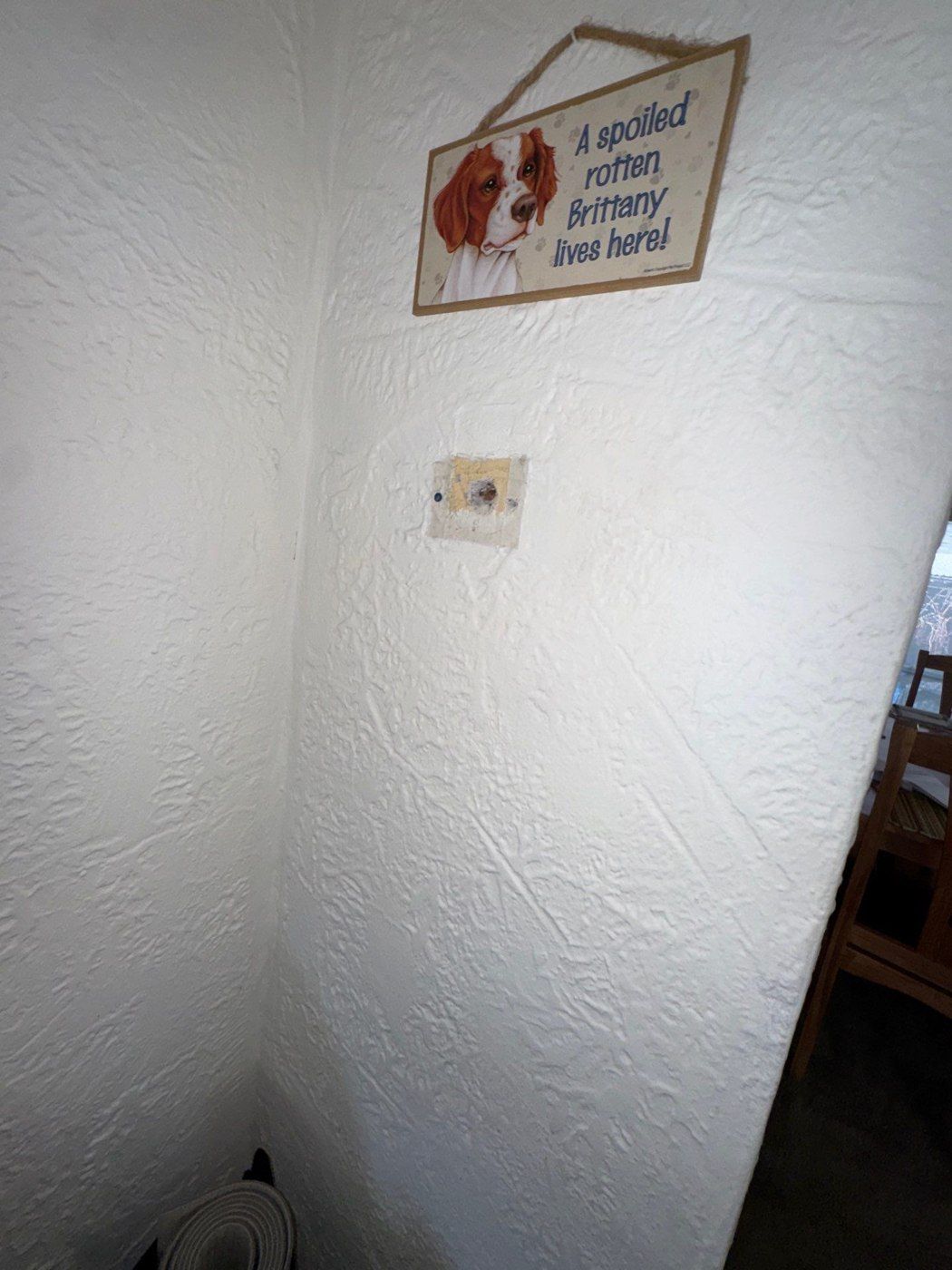
Point out the existing wall appearance and ask how the proposed repair will meet it. Review the intended paint, sheen and complete wall area before approval. If a different finish or broader repaint is important, discuss it as part of the scope rather than assuming it follows automatically from the word texture. The real related photograph on this page comes from another repair estimate and does not establish this wall’s material or damage.
Optional rooms stay separate
Were the small bathrooms part of the damaged-wall item?
No. Small-bathroom preparation and painting appear under optional additions outside the main total. That placement distinguishes the damaged-wall item from additional rooms the homeowner could consider. The reviewed record does not provide a final selection for each bathroom or a detailed list of bathroom surfaces.
For your own project, keep optional room work beside its own surface description. Ask whether the bathroom item includes walls, ceilings, trim or other specific surfaces and how many rooms are intended. A main wall repair should not silently expand into painting adjacent bathrooms. A clear room list also helps avoid assuming that a bathroom option is a universal price or scope for every bathroom in the area.
From agreement to readiness
What did Peter’s next-step message cover?
Peter’s recorded message after acceptance described arranging a start date, providing a preparation checklist and offering a color consultation if desired. Those are practical steps for connecting the proposal to the homeowner’s readiness. The message does not document the repair’s completion or supply a final color selection.
Bring your questions about access, clearing the work area and the intended wall finish into that next conversation. The proposal also calls for a final walkthrough with the crew lead and a process for discussing touch-ups. Keeping the same wall boundary available at both the estimate review and walkthrough helps the homeowner assess the agreed item rather than a broader result that was never specified.
Compare the same work
How can a homeowner compare repair-and-paint proposals?
Start with the repair extent and finish boundary, then review replacement, patch finishing, texture, primer and painting. A proposal that names only the patch is different from this item, which names paint over the whole wall. Broader room painting or a different surface finish should be visible as an agreed addition or revision.
For a Colorado Springs interior estimate, bring the damaged area, retained surfaces and desired appearance into one discussion. The value of this example is the connection between several small repair steps and a clearly named paint area. It gives a homeowner useful questions without inventing the cause of the damage, claiming completion or converting an optional room into included work.
Bring this to your walkthrough
A clear plan starts with four checks.
Repair extent
Identify the drywall area and the necessary patch-finishing steps.
Paint boundary
Locate the complete wall intended for paint.
Finish expectation
Discuss retained texture, paint, sheen and lighting concerns.
Separate work
Clarify damage-source work and any optional bathroom painting.
Questions homeowners ask
Before your own project.
Does repairing a patch always mean repainting a whole room?
No. The reviewed item names painting the whole wall, not the entire room. Confirm the finish boundary for your own estimate.
What repair steps did this item include?
Drywall replacement, mud, tape and texture as necessary, primer on new patches, and paint over the whole wall.
Does the painting estimate diagnose a leak?
No. The item identifies water damage but does not establish its cause or include a named repair to that cause.
Is an invisible texture match guaranteed?
The reviewed wording does not establish that guarantee. Discuss the intended repaired surface and appearance with the estimator.
Were bathrooms included in the main repair?
Small bathrooms were listed as optional additions outside the main total. Their final surfaces and selection require their own clarification.
What if more repair work is discovered?
The proposal provides for notifying the homeowner and preparing an additional work order for approval for unforeseen repairs.
Does the photograph show this damaged wall?
No. It is a real related wall-repair estimate photo from another home, identified as a different project and not a water-damage result.
Make the plan fit your home.
Bring your questions, the surfaces you want to change and the details you want to preserve. The Carroll family can review them with you during a free in-person estimate.
Book Your Free EstimateExplore interior painting or more interior and cabinet project stories.